Introduction
If you want to understand the soul of Jaffna, you do not look at its forts or its libraries—you look at Nallur. For 25 days every year, the red-and-white striped walls of the Nallur Kandaswamy Kovil become the center of the universe for Sri Lankan Tamils. The Nallur Festival 2026 promises to be a spectacle of faith, discipline, and colour, drawing hundreds of thousands of devotees from London, Toronto, Paris, and Colombo.
But Nallur is not like other festivals. There is no chaos, no shouting, and no disorder. It is famous for its military-like punctuality and pin-drop silence during the puja. Whether you are a devotee fulfilling a vow or a traveler witnessing the grandeur of Dravidian culture, navigating this event requires local knowledge. Here is everything you need to know about the Nallur Festival 2026.
Projected Dates for Nallur 2026
The festival dates follow the Tamil lunar calendar, specifically starting after the Aadi Amavasai (New Moon).
- Flag Hoisting (Kodiyetram): Expected around August 17, 2026.
- Significance: This marks the official start. The holy flag is hoisted, and the “protection” ritual begins.
- Chariot Festival (Ther Thiruvizha): Expected around September 9 or 10, 2026.
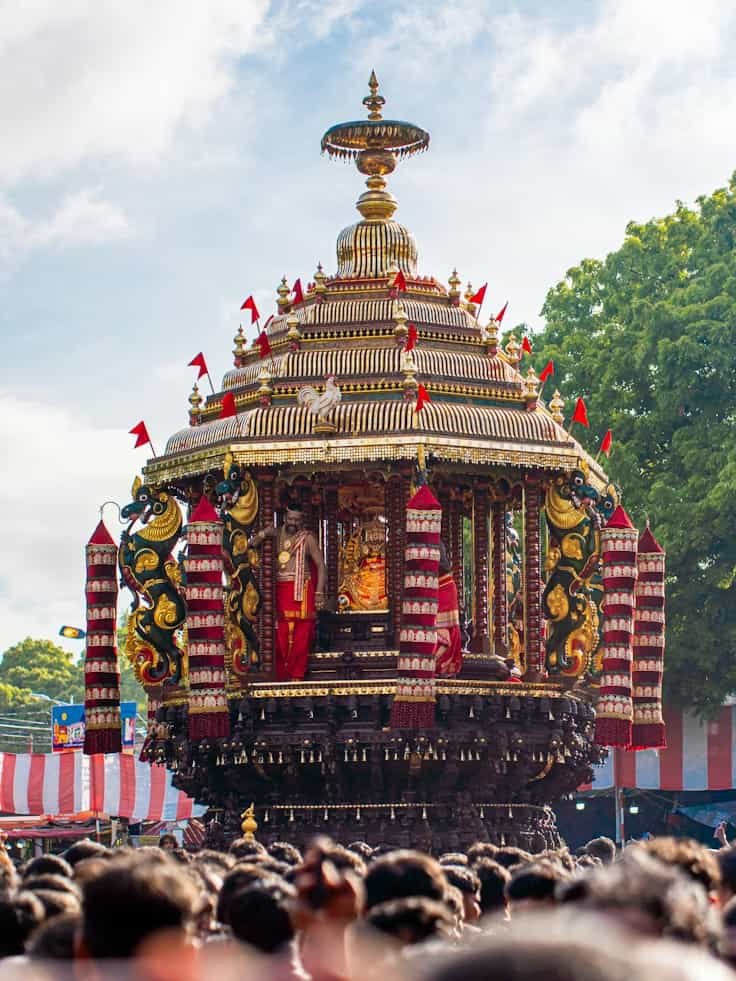
- Significance: The biggest day. Lord Murugan is placed on a massive, ornate wooden chariot and pulled by thousands of devotees. The streets are a sea of shirtless men chanting “Arohara!”
- Water Cutting (Theertham): Expected the day after the Chariot festival.
- Significance: The conclusion of the festival, where the deity is bathed in the temple tank.
The “Nallur Code”: Rules & Etiquette
Unlike other temples in India or Sri Lanka, Nallur has strict rules that are enforced without exception. To blend in and show respect, you must follow the “Nallur Code.”
1. The Dress Code
- Men: You must remove your shirt / t-shirt before entering the temple complex. You cannot just drape it over your shoulder; it must be held in your hand or tied around your waist. Wearing a Verti (Dhoti) is preferred, but trousers/jeans are allowed.
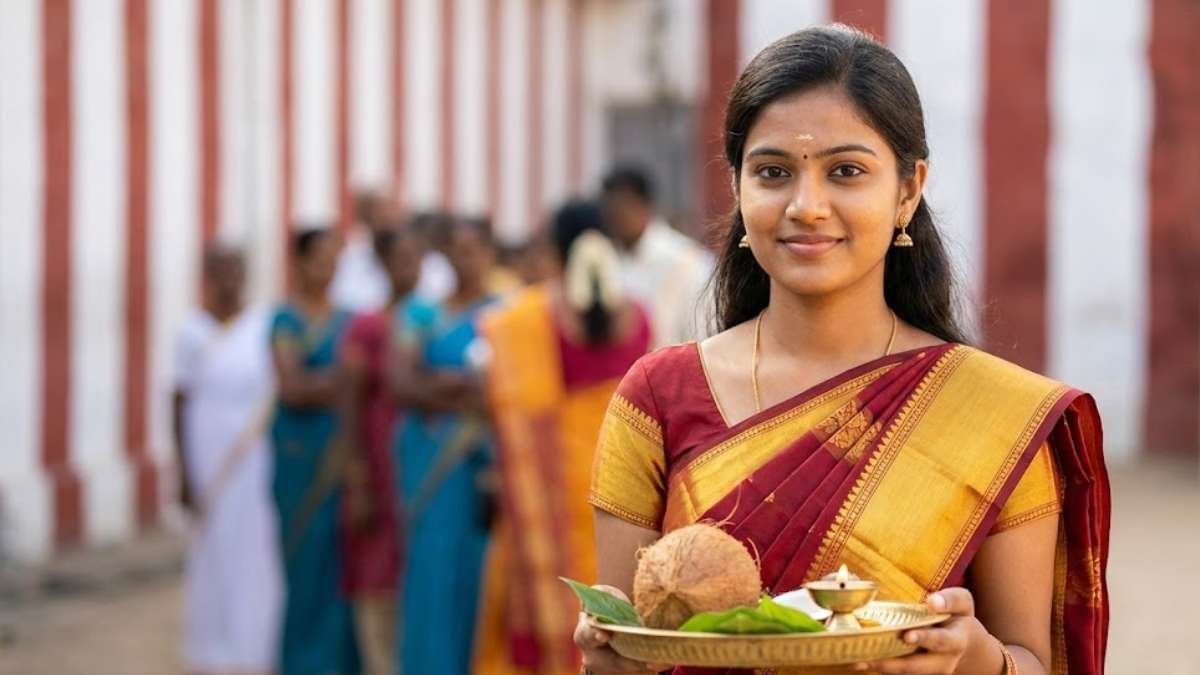
- Women: Modesty is key. Saree or Salwar Kameez is the standard. Avoid short skirts or sleeveless tops, or you will be denied entry.
2. The Silence
- Inside the temple walls, silence is golden. Even when thousands are present, you will only hear the bell and the chanting of the priests. Mobile phones should be on silent or switched off. Taking selfies with your back to the deity is considered disrespectful.
3. The Timing
- If the Puja is scheduled for 4:00 PM, it starts at 4:00:00 PM. The Nallur administration runs on an atomic clock. Arrive at least 30 minutes early if you want a spot near the sanctum.
The “Ther” Experience (Chariot Festival)
If you can only visit for one day during the Nallur Festival 2026, make it the Chariot Festival (Ther).
- The Vibe: The energy shifts from silent devotion to ecstatic celebration. The rhythm of the Kavil drums, the smell of camphor and crushed coconuts, and the sight of the massive chariot (which requires hundreds of men to pull) is overwhelming.
- The Heat: The Chariot procession happens in the morning, usually starting at 7:00 AM and ending by noon. The Jaffna sun in August is unforgiving. You will be standing barefoot on hot tar/sand.
- Survival Tip: Hydrate heavily the night before. Since you cannot wear shoes, some locals wear thick socks until they reach the temple gate, but be prepared to walk barefoot for hours.
Where to Stay?
Booking accommodation for the Nallur Festival 2026 must be done months in advance.
- Jaffna Town: Ideal for proximity (hotels like Jetwing Jaffna or North Gate).
- Nallur Vicinity: There are many small guest houses and homestays within walking distance of the temple, which is perfect if you plan to attend the early morning (4:00 AM) pujas.
Cultural Highlights to Watch For
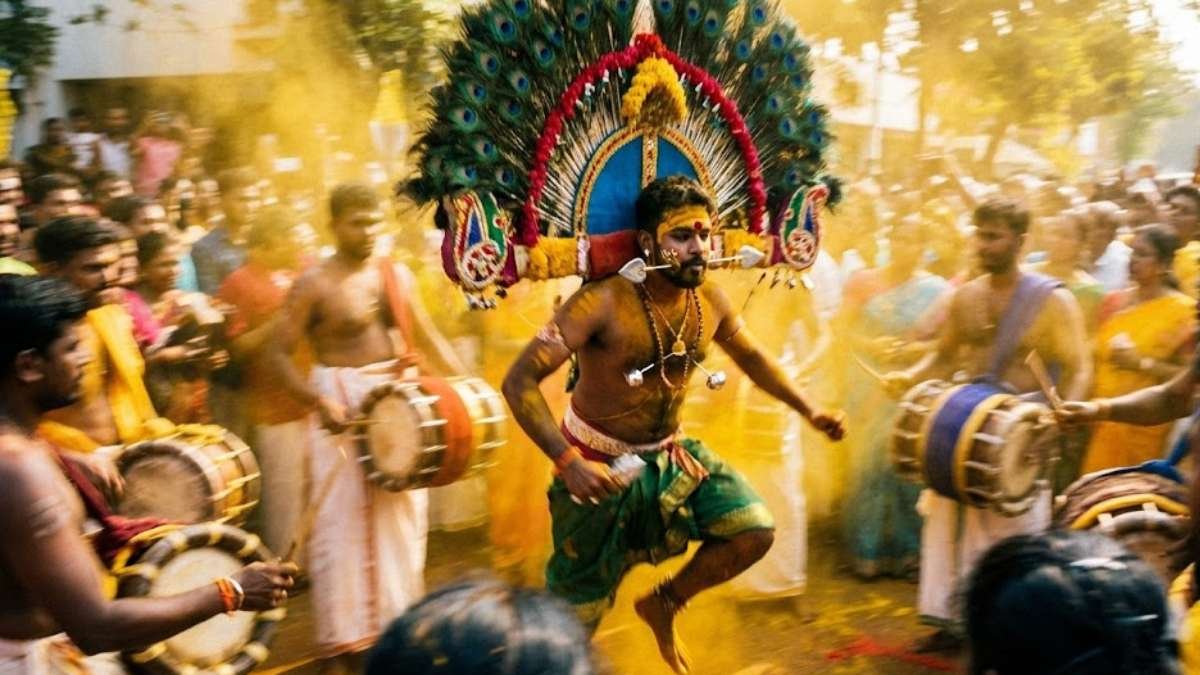
- Kavadi Attam: Devotees carrying the Kavadi (a decorated arch) on their shoulders, often dancing in a trance state.
- Angapradakshinam: Men rolling their bodies around the temple premises as an act of penance.
- Thaneer Pandals: Free refreshment stalls set up by locals outside the temple zone, offering spiced buttermilk (Moru) and fruit juices to pilgrims.